DIY to Dakar
Every year, thousands of adventure motorcyclists dream about riding to Dakar. For most, that's as far as it ever gets. The route seems too long. Africa feels too intimidating. The borders sound complicated. Everyone on YouTube seems to be riding a £25,000 adventure bike through endless sand dunes, making the whole thing look like an expedition only a handful of people could ever achieve.
The truth is very different.
Having ridden the route several times, I genuinely believe that a ride to Dakar is far more achievable than most people imagine. With sensible planning, a reliable motorcycle and the right attitude, it's a journey that many riders could complete.
This isn't intended to be a detailed planning guide. Instead, it's designed to answer some of the questions that stop people before they've even begun. So...
Could you ride to Dakar yourself?
Yes. Absolutely.
What bike should I take?
This is probably the question I'm asked more than any other. The answer depends entirely on what sort of trip you want. If your goal is simply to reach Dakar while staying on paved roads, then almost any reliable motorcycle is capable of getting there. Every year people make the journey on BMW GSs, Africa Twins, Triumph Tigers, Transalps, V-Stroms, old Hondas, touring bikes and even scooters.
The roads are generally far better than many people expect. If, however, you want to explore Morocco's mountain pistes, ride through the desert tracks or tackle some of the more remote sections, then smaller and lighter really is better.
There's a reason we use Honda CRF300 Rallys on the Paris Dakar Challenge. They're light, simple, reliable and remarkably capable both on and off-road. After many thousands of miles across Europe and Africa, I honestly think they're one of the best motorcycles available for this type of adventure.
If you're trying to decide what bike to take, we've written a much more detailed guide here:
👉 Why we choose the CRF300 Rally >>
Do I need to be a good off-road rider?
No. This is one of the biggest misconceptions. If your ambition is simply to reach Dakar, you can stay on tarmac for almost the entire journey. In fact, many riders never leave sealed roads at all. The off-road sections simply add another dimension to the adventure if that's something you enjoy.
Even then, you don't need to be an enduro expert. Most of the pistes are straightforward gravel roads or rocky tracks rather than extreme technical riding. Ride within your limits. There's absolutely nothing wrong with taking the easier route if that's what makes the trip enjoyable.
Remember—the objective isn't to prove how tough you are. It's to get to Dakar.
Is it dangerous?
This is usually the second question people ask. The honest answer is that every journey carries some level of risk. However, the biggest surprise for most first-time visitors is just how friendly people are. Across Morocco, Mauritania, Senegal and The Gambia we've experienced extraordinary hospitality from complete strangers.
People wave. Children run out to greet you. Shopkeepers invite you for tea. Police officers are often curious about your journey rather than suspicious. Ironically, the poorer the country, the warmer the welcome often seems to be.
That's not to say you should ignore common sense. Don't leave expensive equipment lying around. Avoid wandering unfamiliar areas late at night. Be sensible with money and passports. Exactly the same precautions you'd take anywhere in the world.
Personally, I generally feel far safer walking around most towns in West Africa than I do in many large European cities.
How do I navigate?
It's never been easier. You certainly don't need expensive GPS equipment. Google Maps and Apple Maps both allow you to download maps for offline use before you leave home, which works perfectly for road riding. If you want something more adventure-focused, apps like OsmAnd, Organic Maps and Maps.me are excellent and cost little or nothing.
Carry a paper map as a backup. Not because you'll need it very often, but because it's useful for understanding the bigger picture and planning your next day. You don't need complicated rally navigation equipment. Just keep it simple.
👉 See our Info Pack and Admin Pack downloads for more information >>
What about the borders?
This is the part everyone worries about. And yes... Borders can sometimes be chaotic. There may be queues. Officials may send you between different buildings. You might have to fill in forms you've never seen before. Someone may point vaguely in a direction without much explanation.
None of this means you've done anything wrong. Just accept that borders take time. Stay patient. Smile. Have your documents organised in a folder. Work through each step one at a time. Eventually you'll pop out the other side wondering what all the fuss was about.
The first border always feels intimidating. By the fourth or fifth you'll wonder why you were ever worried.
What should I pack?
Less than you think. One of the biggest mistakes first-time overlanders make is packing for every possible scenario. You don't need enough tools to rebuild your engine. You don't need fifteen changes of clothes. You don't need to carry a month's worth of food. Most things can be bought along the way. Take good riding gear. Basic tools. Essential spares. Comfortable clothes for the evenings. Then stop.
A lighter motorcycle is nearly always a happier motorcycle.
How much does it cost?
Much less than many people imagine. Fuel is generally cheaper than much of Europe. Accommodation ranges from simple guesthouses to comfortable hotels. Food is inexpensive once you leave Western Europe.
The biggest costs are usually getting yourself there and, perhaps surprisingly... getting yourself home.
How do I get back from Dakar?
This is, without doubt, the hardest part of the entire journey. Riding to Dakar is relatively straightforward. Getting your motorcycle home again is where the real planning begins. Shipping individual motorcycles from Dakar or The Gambia can be surprisingly expensive and sometimes frustrating to arrange.
Many shipping companies simply aren't interested in handling single bikes. Others only operate irregular schedules. Most organised trips overcome this by filling an entire shipping container, which spreads the cost between multiple motorcycles.
If you're travelling independently, riding back to Europe may actually be the simplest option if you have the time. It doubles the mileage, of course, but many riders enjoy the return journey just as much as the ride south.
Whatever you decide, think about your return logistics before you leave—not when you're standing on the beach in Dakar wondering what happens next.
What about mechanical problems?
Modern motorcycles are remarkably reliable. Preparation is far more important than carrying a workshop's worth of tools. Start with a well-maintained bike. Replace anything that's already worn. Fit fresh tyres before you leave. Learn how to repair a puncture. Carry a few basic spares and understand how to perform simple roadside maintenance.
Beyond that, you'd be amazed how resourceful local mechanics can be if something does go wrong.
So... should you do it?
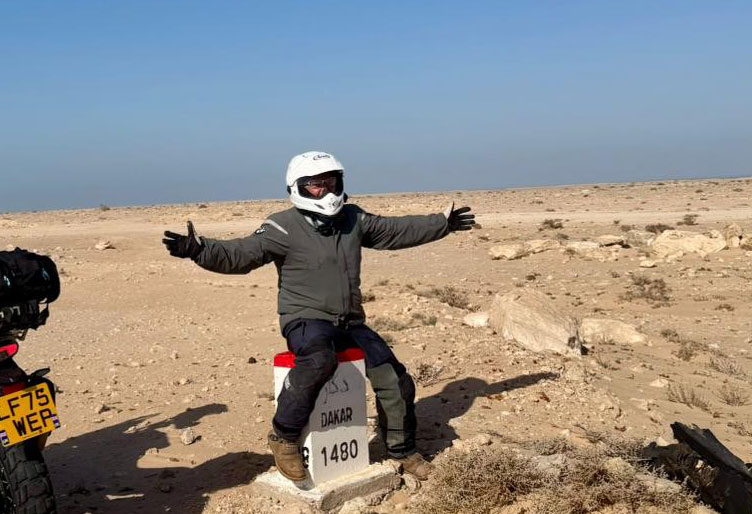
If riding to Dakar has been sitting on your bucket list for years, my advice is simple. Stop waiting for the perfect time. You'll probably never have the perfect motorcycle. You'll never know absolutely everything. You'll never eliminate every uncertainty. At some point, you simply have to decide that you're going.
Whether you organise the journey yourself, travel with friends or join an organised Challenge doesn't really matter. What matters is that you actually do it. Because years from now, you'll almost certainly remember the day you rode into Dakar. You probably won't remember why you spent another five years thinking about it first.
Safe travels—and perhaps we'll see you somewhere on the road south.
Know someone who’d love this? Challenge them to join you:
Join the mailing list
QUESTIONS?
Whether you're a seasoned rider or new to off-road biking, don't let doubts hold you back; our team is here to answer all your questions and support you every step of the way. Contact us today to learn more about how you can join this unforgettable adventure.